

A great hair transformation does more than create a striking before-and-after. It gives a client the confidence to book the restaurant, take the photo, return to work feeling different and recommend the person who made it happen. Learning how to market hair transformations means turning those real moments into a trusted local reputation - without making promises your consultation cannot support.
For a hair extensions business, marketing is not simply about attracting one fitting. It is about showing prospective clients that they will be listened to, matched with the right method and shade, and looked after long after fitting day. That is what turns a high-value service into repeat appointments, referrals and a business with momentum.
Start with the transformation your client wants
Clients rarely begin by searching for the technical details of a hair extension method. They are more likely to want fuller hair after thinning, extra length for an event, a change after a difficult period or simply hair that feels more like them. Your marketing should speak to that desired feeling while staying honest about what extensions can achieve.
Use client-centred language such as fuller-looking hair, natural movement, a personalised colour match and a makeover designed around lifestyle. Avoid presenting every transformation as instant perfection. Hair type, condition, budget, maintenance commitment and the client’s desired look all matter. Explaining this clearly makes your service feel more professional, not less exciting.
Your specialist position is valuable here. A business focused on extensions and makeovers can communicate a clear promise: this is not an add-on service squeezed between general salon appointments. It is a considered transformation experience led by consultation, fitting and aftercare.
How to market hair transformations with proof
The strongest marketing asset in this category is visible evidence. A well-photographed transformation can stop someone scrolling, but it only builds trust when it is accurate, consistent and supported by context.
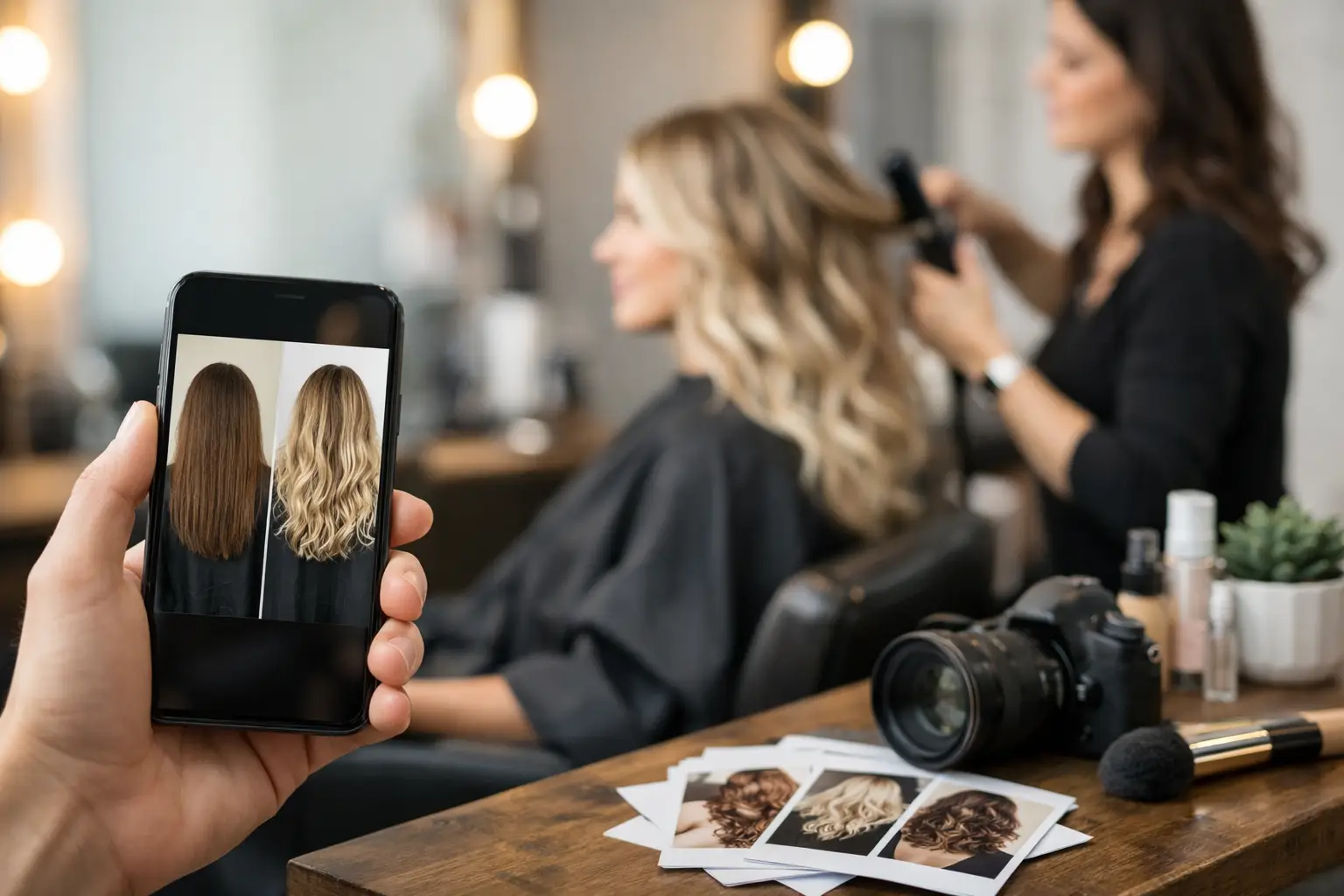
Photograph every client only with clear permission. Take a true before image and an after image in similar lighting, at a similar angle and against a clean background. Avoid heavy filters that alter hair colour, skin tone or the apparent density of the result. Potential clients are making a considered purchase, so they need to see work they can believe.
Where possible, show more than one angle. A front view may demonstrate length and face-framing, while a back view reveals blend, colour placement and overall fullness. Short videos are especially useful because movement helps clients judge whether the hair looks natural. Keep the focus on the finished work rather than chasing complicated edits.
A caption should add the story the image cannot tell. Mention the client goal, the type of result achieved and the care taken to create a suitable match. Do not share private details or imply a medical solution where none exists. A simple explanation such as a finer-haired client choosing added volume and length through a tailored consultation is both persuasive and responsible.
Testimonials matter for the same reason. Ask clients what changed for them, not just whether they liked their hair. Comments about feeling confident, receiving compliments or appreciating clear aftercare help future clients picture their own experience. Use genuine feedback in the client’s own words, with permission.
Make the consultation part of the marketing
A consultation is often the point where interest becomes a booking. Market it as a valuable first step, not a hurdle before payment. Prospective clients want to know that somebody will assess their hair, understand their routine and discuss what is realistic before recommending a fitting.
Be clear about what happens. Explain that you will discuss their hair goals, match colour and texture, consider suitable extension options, talk through maintenance and provide transparent costs. This reassures clients who have had poor experiences, feel nervous about damage or worry that they will be pressured into the most expensive option.
The best consultations also protect your reputation. Not every client is ready for a fitting, and not every requested look is right for their natural hair. Being prepared to advise, adjust the plan or decline unsuitable work demonstrates expertise. In a local business, this integrity travels quickly through word of mouth.
Build a local presence, not just an online feed
Social media can generate attention, but local clients need an easy path from seeing your work to booking an appointment. Make your location, service area, consultation process and contact route obvious wherever you present the business. If you work from a home studio, salon space or mobile setting, communicate the experience professionally and accurately.
Think about the places where your ideal client already makes appearance-led decisions. Local bridal suppliers, beauty professionals, photographers, make-up artists and occasionwear businesses may serve clients preparing for weddings, parties, holidays and milestone events. The right relationship can create warm referrals because each business is helping the client feel ready for the same moment.
Choose partnerships carefully. A recommendation should fit your standards and target market, rather than becoming a loose exchange of discount codes. A bridal make-up artist whose clients value polished, premium preparation may be a stronger match than a broad local promotion that brings enquiries with no real interest in consultation-led extensions.
Offline visibility still has a role. Branded appointment cards, referral cards and conversations with happy clients can outperform a large but disengaged audience. The aim is not to be known by everyone in your area. It is to become the name people mention when a friend says, ‘I need a hair makeover.’
Turn one fitting into a client journey
Marketing does not stop after the initial booking. Extensions require maintenance, and that creates an opportunity to build a reliable relationship if you set expectations well from day one.
Before the client leaves, make sure they know how to care for their hair, when to return and how to contact you if they have a concern. Follow up after the fitting with a friendly check-in. This is good client care, but it is also smart commercial practice: clients who feel supported are more likely to maintain their appointment schedule and share their experience.
Encourage rebooking at the right time rather than relying on clients to remember. Keep messages useful and personal. A reminder about a maintenance appointment, seasonal colour refresh or upcoming special occasion can feel helpful when it relates to the client’s previous service. Constant generic offers can have the opposite effect, particularly for a premium transformation brand.
Referral rewards can work well, but they should protect your value. Consider offering a modest credit towards maintenance or a thoughtful add-on rather than cutting prices heavily. Your best clients should be rewarded for introducing people who value your service, not trained to wait for discounts.
Track the marketing that brings the right clients
It is easy to put effort into posts that receive likes and overlook the activity that actually produces consultations. Keep a simple record of where every enquiry came from, whether it booked, the service value and whether that client returned. Over time, you will see whether referrals, local partnerships, short videos, paid promotion or organic posts are producing your strongest clients.
Do not judge every channel by the same measure. A dramatic transformation video may introduce your brand to many people, while a client testimonial may generate fewer views but more serious consultation requests. Both can be worthwhile. The question is whether the content supports your business model and attracts clients who understand the commitment involved.
For entrepreneurs considering a Hair Extensions Franchise Opportunity, this focus is particularly useful. A recognised name such as Need A Hair Makeover can provide a clear specialist proposition, but local trust is still earned appointment by appointment. Your consultation quality, portfolio and client care bring the brand promise to life in your area.
Protect trust as you grow
Ambition is essential, but marketing claims must stay aligned with your training, products and service capacity. Do not use someone else’s work as your own, promise results that ignore hair condition or overbook fitting slots at the expense of a calm client experience. Hair transformations are personal, and clients notice when the service feels rushed.
The most effective marketing is often a consistent pattern: beautiful honest results, a clear consultation offer, thoughtful follow-up and clients who genuinely want to tell others. Keep giving people a transformation they feel proud to show, and your local reputation has every chance to grow with it.