
A client can leave a fitting appointment with longer, fuller hair and a real confidence lift. But the transformation only stays beautiful when they understand how often to maintain hair extensions and why those appointments matter. For a hair extensions business, maintenance is not an add-on service. It is where great results, client trust and repeat income come together.
For aspiring franchisees, this is one of the most attractive parts of a specialist hair extensions model. A considered fitting creates the first impression; regular maintenance builds the relationship. Clients who feel looked after are more likely to return, recommend their technician and see their extensions as part of their ongoing beauty routine.
How Often to Maintain Hair Extensions
Most extension clients need a maintenance appointment every 6 to 8 weeks. That is a useful starting point, not a promise that suits every head of hair. Natural hair growth, the fitting method, lifestyle, home-care routine and the condition of the client’s own hair all affect the right schedule.
As natural hair grows, the attachment moves further away from the scalp. Left too long, this can make extensions harder to manage, more visible and less comfortable. It can also allow tangling around the root area, particularly for clients with fine hair or busy routines. A maintenance appointment allows the technician to assess the attachment points, remove shed hairs, reposition or refit extensions where appropriate, and check that the client’s natural hair remains in good condition.
The most effective approach is to set the likely maintenance window during the consultation and confirm the next appointment before the client leaves. This replaces uncertainty with a clear plan. It also shows clients that extensions are a professional service with an aftercare journey, not a one-off purchase.
Typical maintenance windows by method
Tape extensions commonly require removal and refitting at around 6 to 8 weeks, as the tapes grow down with the client’s natural hair. The hair itself may often be reused if it has been cared for well, but the adhesive tabs need replacing.
Weave or weft methods are also commonly maintained at around 6 to 8 weeks. The exact timing depends on the fitting technique, the client’s regrowth and how well they can cleanse and brush around the attachment area. Repositioning at the right time keeps the result sitting close to the scalp and looking polished.
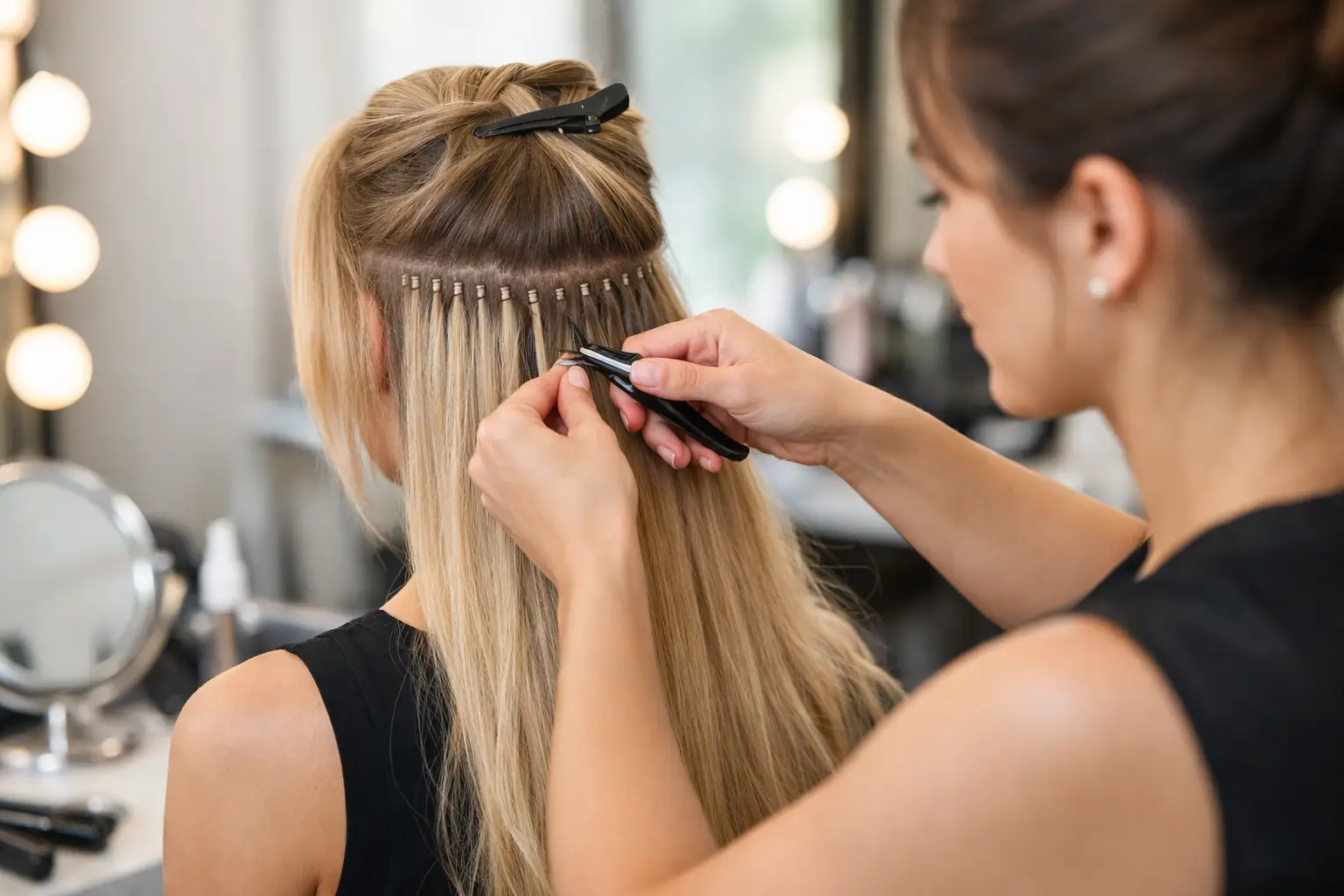
Individual methods, including nano rings or bonded extensions, can sometimes last longer between full removal appointments, often around 8 to 12 weeks. However, the client should not assume longer is always better. Fine hair, quicker growth or early signs of matting may mean an earlier appointment is the more responsible recommendation.
These timings should always be guided by the manufacturer’s instructions, your training and a proper assessment. A specialist technician earns trust by being precise, rather than giving every client the same answer.
What a good maintenance appointment should achieve
A maintenance appointment is a quality-control moment for the whole transformation. It should begin with a conversation: how has the hair felt, has the client noticed any slipping or tangling, have they changed their colour, exercise routine or styling habits? Small details can explain why extensions are behaving differently from one appointment to the next.
The technician should then examine the scalp, natural hair and attachment areas before deciding on the right work. Depending on the method, this may involve safely removing the extensions, separating naturally shed hairs, cleansing and drying the hair, replacing tapes or beads, and refitting the extension hair. It is also the time to trim and blend the finished style so it continues to look intentional and flattering.
Clients often value this appointment because it protects the investment they have made in quality hair. Reusable extension hair can offer better value over time, but only when it is maintained professionally and cared for properly at home. Being honest about when hair should be refreshed rather than reused protects both the client’s result and your reputation.
Why clients sometimes need an earlier appointment
A 6 to 8-week plan is not a reason to wait if the hair is signalling a problem. Clients should be encouraged to contact their technician sooner if an attachment feels loose, there is discomfort, persistent itching, visible matting, unusual shedding or difficulty washing around the roots.
Early action is usually simpler than trying to correct an issue after several more weeks. This is particularly relevant for clients who swim regularly, train frequently, wear their hair up every day or have naturally fine hair. Their extensions may need closer monitoring and a more tailored schedule.
A strong client relationship makes these conversations easy. Rather than worrying that they are being a nuisance, clients should feel comfortable checking in. For the franchisee, that responsiveness helps turn a technical service into a trusted local business.
Aftercare determines the maintenance experience
Maintenance appointments work best when clients understand their part of the routine. They do not need a complicated regime, but they do need clear, practical advice that matches their extension method.
Clients should brush gently and regularly with an extension-safe brush, supporting the hair near the roots as they work through the lengths. They should wash carefully around the attachment areas, avoid piling wet hair on top of the head, and dry the roots thoroughly. Going to bed with damp extension hair is a common cause of tangling and should be avoided.
Products matter too. Heavy oils, conditioners or unsuitable ingredients around certain attachments can affect their hold, while a lack of conditioning through the mid-lengths and ends can leave extension hair dry. A technician should explain where each product belongs, not simply tell a client to buy more products.
Sleep, holidays and styling deserve a mention during every aftercare conversation. A loose braid can help minimise overnight tangling. Chlorine, salt water and sun exposure can affect colour and texture, so clients heading away should know how to protect their hair. Heat styling is possible with many human-hair extensions, but a heat protectant and sensible temperatures help preserve the hair for longer.
Turning maintenance into loyal repeat business
For an entrepreneur, regular maintenance creates a valuable rhythm in the diary. Unlike a business that relies only on finding new clients, a specialist extensions service can build predictable repeat bookings from each successful fitting. That repeat cycle supports revenue planning, improves local word of mouth and gives technicians more opportunities to understand what each client wants from their hair.
The commercial opportunity only works when the service remains client-led. Maintenance should never be treated as an automatic sale. The client must understand the likely frequency, expected cost, what is included and what may change if new hair is needed. Clear pricing and realistic expectations build far more long-term value than vague promises about how long a set will last.
This is where a focused Hair Extensions Franchise Opportunity can offer real structure. Need A Hair Makeover is built around the full client journey: consultation, fitting, maintenance and the confidence that comes from a well-managed makeover. For a franchisee, having a clear service proposition makes it easier to explain why follow-up care is essential rather than optional.
Make the next appointment part of the fitting
The easiest time to discuss maintenance is while the client is delighted with their finished hair. Before they leave, explain their personal maintenance window, talk through the warning signs that mean they should get in touch sooner, and provisionally book the next visit. A reminder closer to the date is helpful, but the confidence to return starts with the original conversation.
Clients do not simply come back because their extensions have grown out. They return because they remember how the service made them feel: listened to, reassured and confident in their look. Deliver that feeling at every maintenance appointment and a single hair transformation can become the beginning of a lasting local client base.